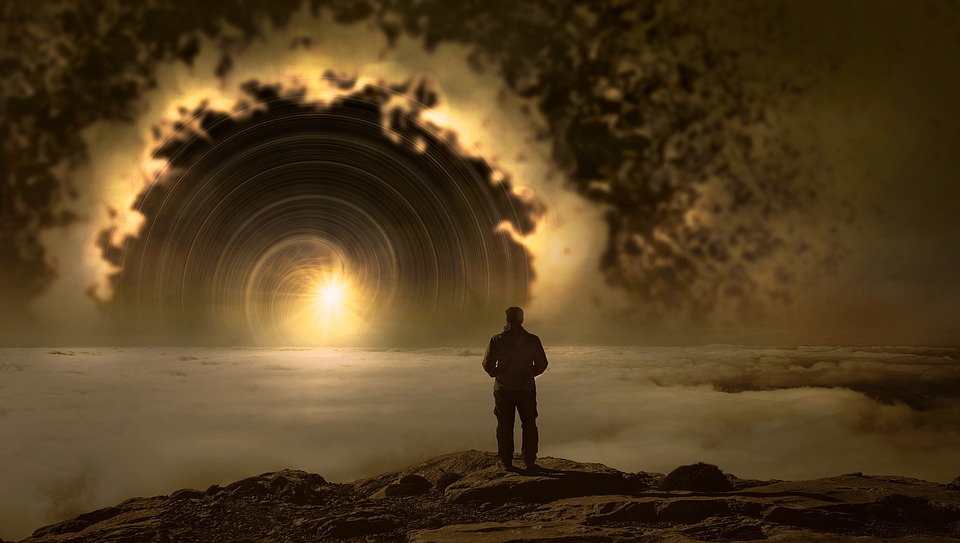
“The distinction between the past, present and future is only a stubbornly persistent illusion” ― Albert Einstein

Universe: A Dream reigning in the veins

Friday, 22 March 2024

The explosion of Corona Borealis: Once in a lifetime sight in the sky


According to NASA, astronomers anticipate that a "new star" will emerge in the night sky at any moment between now and September, 2024. This celestial spectacle is expected to be once in a lifetime.


The Milky Way's Corona Borealis, or Northern Crown constellation, which is situated between the Boötes and Hercules constellations, is where the anticipated brightening event, known as a nova, will occur.

A nova is the quick, brief explosion from a collapsing star known as a white dwarf, whereas a supernova is the catastrophic death of a large star.

The "Blaze Star," or T Coronae Borealis, is a binary system in the Corona Borealis that consists of an aged red giant star and a dead white dwarf star. When stars run out of hydrogen for nuclear fusion and start to fade, red giants are created. NASA estimates that in roughly 5 or 6 billion years, our sun will turn into a red giant, sputtering and growing as it releases layers of material and probably vaporizing the inner planets of the solar system. In this context, Earth's future is yet unknown.

An explosive event occurs in T Coronae Borealis approximately every 79 years.

Because of their close proximity, the stars in the orbital pair interact furiously with one another. As the red giant heats up, it becomes more unstable, shedding its outer layers that fall as matter onto the white dwarf star.

According to the space agency, the interchange of stuff leads the white dwarf's atmosphere to steadily heat up until it undergoes a "runaway thermonuclear reaction," which results in a nova.

How to keep an eye on the event?

Astronomers are closely monitoring T Coronae Borealis once more after it last had a spectacular outburst in 1946.

In an email, NASA Meteoroid Environments Office lead William J. Cooke stated that "most novae happen unexpectedly, without warning." Nonetheless, T Coronae Borealis is among the galaxy's ten recurrent novae. From the last eruption in 1946, we know that the star will darken for a little more than a year before brightening up quickly. T Coronae Borealis started to dim in March of last year, and between now and September, some researchers anticipate that it may go nova. We are unable to predict with greater accuracy than the few months it will take for this to occur, given the current state of knowledge.

It is anticipated that the star system, which is 3,000 light-years away from Earth and usually too faint to be seen with the unaided eye, would become as bright as Polaris, or the North Star.

When the nova reaches its maximum brightness, it will appear as if a new star has emerged. It can be seen with binoculars for a little over a week and without any equipment for a few days, after which it will fade and be lost from view for another 80 years or more.

The nova will be visible from the Northern Hemisphere, appearing in a little arc between the constellations Hercules and Boötes.

The Neil Gehrels Swift Observatory, located in space, will be used by astronomers to analyze the celestial event through ultraviolet and X-ray light, while the Hubble Space Telescope will be used to observe the nova.

Cooke stated, "Repeated novae like T Coronae Borealis provide us insights into the thermonuclear runaway that occurs on the surface of the white dwarf when the star goes nova and help us understand the mass transfer between the stars in these systems."

Updates regarding the eruption and its appearance will be available from the NASAUniverse account on X, formerly known as Twitter.

Cooke remarked that the brightness of Nova Cygni, which he saw last in 1975, was comparable to that of T Coronae Borealis. It is not anticipated that Nova Cygni will encounter another explosion.

"On August 29, I was outside as a teenage astronomy geek who was about to start college," Cooke recalled. "Looking up at the sky, I saw that there was a star that shouldn't have been there in the Cygnus constellation. We discovered that we were staring at a nova after I persuaded some pals who thought I was insane to look at it! It was a really memorable event that confirmed my professional decision to pursue astronomy. I used to make jokes about how undergraduate physics had to blow out a star for me to have to endure it.


Prabir Rudra
Share:

Sunday, 17 March 2024

Wormhole: The missing link between us and our future home


The term "wormhole" usually describes a theoretical spacetime tunnel-like structure that may link two different points in space or time, possibly enabling instantaneous or faster-than-light travel between far-off places. The idea comes from theoretical physics, specifically from the perspective of general relativity.

Wormholes are frequently discussed as solutions to Einstein's field equations in astrophysics and cosmology. These equations control the gravitational effects of matter and energy on the curvature of spacetime. Although the equations of general relativity make wormholes theoretically viable, they have not been detected or verified to exist in reality, hence they are still considered speculative.

Scientists, authors, and filmmakers have all been captivated by wormholes, which are often depicted in science fiction as a way to travel through space or journey back in time. Wormhole stability, traversability, and the exotic stuff needed to stabilize them are only a few of the many unresolved concerns in the nascent scientific field of wormhole research.

More recently, the word "wormhole" has been used metaphorically to refer to systems or procedures that allow for unusually fast data transfer, financial transactions, or communication between distant sites or systems in domains like computer science and finance. A "wormhole" in the context of blockchain technology, for instance, might be a bridge that permits token transfers between several blockchain networks.

Given the challenges and uncertainties like existence, stability, need for exotic matter, traversability, time dilation, and paradoxes, interstellar travel via wormholes remains highly speculative at this point. While it's an intriguing concept that has captured the imagination of scientists and science fiction enthusiasts alike, practical implementation would require significant advancements in our understanding of fundamental physics and the development of technologies far beyond our current capabilities. But if this turns out to be a success then humanity can seriously think in terms of colonizing other habitable planets in the future, when the resources of our planet get completely depleted. 

It is said that the future of humanity lies in space and wormholes might just be the missing link between us and our destination (future home). But we have a long way to go!!


Prabir Rudra

Share:

Thursday, 14 March 2024

Pi Day 2024


Pi Day is an annual celebration observed on March 14th (3/14) around the world. It's a day dedicated to the mathematical constant π (pi), which is approximately equal to 3.14159. Here are some key aspects and traditions associated with Pi Day:


  •  Origin: 

Pi Day was first celebrated in 1988 by Larry Shaw, a physicist at the Exploratorium, a museum of science, art, and human perception in San Francisco. Shaw organized various activities and celebrations to mark the day, including a circular parade and eating pie.


  • Significance of Pi: 

Pi is a mathematical constant that represents the ratio of a circle's circumference to its diameter. It's an irrational number, meaning its decimal representation never ends or repeats. Pi has fascinated mathematicians, scientists, and enthusiasts for centuries due to its unique properties.


  • Activities and Events: 

Pi Day is often celebrated in schools, universities, museums, and math clubs through various activities and events. These may include pi recitation competitions, pi-themed quizzes, math art contests, and hands-on activities related to circles and geometry.


  • Pie Eating: 

One of the most popular traditions associated with Pi Day is indulging in pies, both savory and sweet. Whether it's apple pie, pumpkin pie, pizza pie, or any other kind, enjoying a slice of pie on Pi Day has become a widespread tradition.


  • Educational Outreach: 

Pi Day provides an opportunity for educators to engage students in learning about mathematics and its applications in a fun and interactive way. Teachers often use the day to introduce concepts related to circles, geometry, and the history of mathematics.


  • Pi Memorization: 

Some enthusiasts challenge themselves to memorize and recite as many digits of pi as possible. While memorizing pi to hundreds or even thousands of digits is impressive, it's important to note that the practical applications of pi typically require only a few decimal places.


  • Online Celebrations: 

With the rise of social media and online communities, Pi Day celebrations have expanded to the digital realm. People share pi-related memes, jokes, artwork, and trivia on platforms like Twitter, Instagram, and Reddit, fostering a sense of camaraderie among math enthusiasts worldwide.


Overall, Pi Day is a fun and inclusive celebration of mathematics that encourages people of all ages to appreciate the beauty and ubiquity of numbers in our lives. Whether you're a seasoned mathematician or just someone who enjoys a good slice of pie, there's something for everyone to enjoy on Pi Day. Wish everyone a very happy Pi Day 2024!!


Prabir Rudra

Share:

Tuesday, 12 March 2024

Classical Mechanics: A journey from Newton to Lagrange and Hamilton

Classical mechanics, as understood today, is largely attributed to the foundational contributions of Sir Isaac Newton, building upon the work of earlier thinkers like Galileo Galilei. Here is a brief overview of the contributions of Newton and Galileo to classical mechanics:


Galileo Galilei (1564-1642):

  • Experimental Approach:

Galileo is often considered the father of modern physics due to his emphasis on experimental methods. He conducted a series of experiments on inclined planes and falling bodies to study the fundamental principles of motion.

  •  Law of Inertia:

Galileo formulated the principle of inertia, which states that an object at rest will remain at rest, and an object in motion will continue in motion with a constant velocity unless acted upon by an external force. This laid the groundwork for Newton's first law of motion.

  • Uniform Acceleration:

Galileo made significant progress in understanding uniformly accelerated motion. He developed mathematical descriptions of falling bodies, showing that the distance traveled is proportional to the square of the time elapsed.


Isaac Newton (1642-1727):

  • Three Laws of Motion:

Newton formulated three laws of motion, which are fundamental principles of classical mechanics.

First Law (Law of Inertia): An object at rest stays at rest, and an object in motion remains in motion with a constant velocity unless acted upon by a net external force.

Second Law: The force acting on an object is equal to the mass of the object multiplied by its acceleration (F = ma).

Third Law: For every action, there is an equal and opposite reaction.

  • Law of Universal Gravitation:

Newton proposed the law of universal gravitation, which states that every mass attracts every other mass in the universe with a force proportional to the product of their masses and inversely proportional to the square of the distance between their centers.

  • Mathematical Formulation:

Newton's work was not only conceptual but also highly mathematical. He introduced calculus to describe motion and developed differential equations to express the relationship between force, mass, and acceleration.

  • Unified Theory:

 Newton's laws of motion and the law of universal gravitation provided a unified framework for understanding a wide range of phenomena, from the motion of celestial bodies to the behavior of objects on Earth. This marked a significant departure from earlier fragmented approaches.

Together, the contributions of Galileo and Newton laid the foundation for classical mechanics, providing a systematic and mathematical framework for understanding the motion of objects and the forces acting upon them. Their work is essential for understanding the physical world and continues to be a fundamental part of the study of physics.


Development into an advanced form of mechanics

There was a lull following Newton, and it took until the end of the eighteenth century for classical mechanics to advance further. The development of classical mechanics from Newton to Lagrange and Hamilton represents a significant evolution in the understanding of physical systems. Here is a more detailed overview of this progression:


  • Newtonian Mechanics (17th century):

Isaac Newton (1642-1727):

Newton formulated the three laws of motion and the law of universal gravitation, establishing a comprehensive framework for classical mechanics. His work laid the groundwork for understanding the motion of objects and the force interactions between them. Newtonian mechanics was basically a force-based mechanics where all motions were considered to be directly associated with forces.

  • Principle of Least Action (18th century):

Pierre Louis Maupertuis (1698-1759):

    Maupertuis introduced the principle of least action, suggesting that natural processes follow paths that minimize or maximize a certain quantity called action. The principle states that "the actual path taken by a physical system between two points in its configuration space is the one for which the action, defined as the integral of the Lagrangian over time, is stationary—either a minimum, maximum or a saddle point".

  • Analytical Mechanics and Euler-Lagrange Equations (18th century):
Leonhard Euler (1707-1783):

 Euler made significant contributions to mechanics, formulating the Euler-Lagrange equations. These equations provided a mathematical framework for expressing the equations of motion using the principle of least action.

  • Lagrangian Mechanics (18th century):

Joseph-Louis Lagrange (1736-1813):

Lagrange further developed the analytical approach to mechanics, introducing the Lagrangian formulation. In his work "Mécanique Analytique" (1788), Lagrange employed generalized coordinates and the principle of least action to derive the equations of motion.


  • Hamiltonian Mechanics (19th century):

William Rowan Hamilton (1805-1865):

Hamilton built upon Lagrange's work and introduced Hamiltonian mechanics. He reformulated the principle of least action in terms of the Hamiltonian function (H= Kinetic Energy + Potential Energy) leading to Hamilton's principle. In 1833, he published "On a General Method in Dynamics," which introduced the Hamiltonian formulation of mechanics. This approach uses generalized coordinates and momenta to describe the dynamics of a system, and it is equivalent to the Lagrangian formulation. Hamiltonian mechanics provides an alternative perspective, particularly useful in certain physical problems and in the context of quantum mechanics.

In summary, the development of classical mechanics from Newton to Lagrange and Hamilton involved a transition from empirical laws to more abstract and general mathematical formulations. The most striking feature of this advanced form of classical mechanics is that it is no longer a force-based mechanics like its Newtonian counterpart, but it is now based on energy. Euler, Lagrange, and Hamilton each contributed significantly to the analytical and variational approaches that are foundational to classical mechanics today. The Lagrangian and Hamiltonian formulations provide powerful tools for solving complex problems and have applications in various branches of physics.


Prabir Rudra

Share:

Saturday, 1 October 2022

Mysterious radio signals from space indicate that we may have contacted the Alien world


China's five hundred meter aperture spherical radio telescope (FAST) has recorded some strange signals coming from a faraway galaxy (3 billion light-years from Earth). The cosmic source from which these signals are coming is identified as Fast radio burst (FRB) and the source is named FRB 20201124A. 

This is in fact the second time that such repeated signals have been received after its discovery in 2019. FRBs are intense but brief flashes of radio frequency emissions. They last just a few milliseconds, and so detection of these signals requires high-end instruments and proper knowledge.

Chinese astronomers who have studied these signals say that the signals are coming from a magnetar or neutron star residing in that galaxy, having an extremely high magnetic field. The scientists continuously monitored these signals coming from the same direction for 91 hours. Out of these 91 hours, 1863 signals have been received for 82 hours.


                                     Magnetar

Scientists from China and America are now collaborating in studying these strange signals and trying to derive meaning from them. They say that radio signals of different wavelengths have been received from time to time coming from this same direction. Moreover, the object is said to emit smaller and weaker radio bursts between the fast radio bursts. Observations from FAST, Guizhou, China have been localized by the US National Science Foundation's Karl G. Jansky Very Large Array (VLA). 


                                       Signals

They speculate that there is a hidden code in these signals and probably some alien species is trying to communicate with us via these signals. The trouble is however the decryption of this code and understanding the message hidden in it (if at all there is any).

Fast radio bursts are not new to us, in fact, they have been discovered 15 years ago. These radio bursts are associated with the energy release equal to millions of suns. Generally, most FRBs explode once and the corresponding radio signals are received once during a particular time. But there have been exceptions to this. Many FRBs have been found to emit signals continuously over a period of time which is quite baffling indeed. In 2020 a fast radio burst was discovered inside its galaxy, which is again a very rare and strange incident.


Since then the study of FRB has gained interest and scientists have continuously monitored FRB 20201124A. It has been found that the source is not only sending the signals but also polarizing them simultaneously. More polarization would mean stronger magnetic fields of the source. 

Carefully studying these signals would help us to know more about the atmosphere of the source magnetar. The study has been published in the prestigious journal Nature. These signals are continuously reaching us for the past few years, but we are yet to derive any meaning from them. If we finally do succeed in doing that, probably it will be a new dawn in the scientific prowess of humans.

By

Prabir Rudra


Share:

Saturday, 24 September 2022

The rings of Neptune captured by James Webb Space Telescope after three decades


                         Rings of Neptune

Rings of Neptune!! Yes, you heard it correctly. We are all so familiar with the rings of Saturn, the countless small particles of different shapes and sizes that orbit around Saturn, giving a ring-like look. But very rarely do we find anybody speaking about the rings of Neptune. This is exactly what the James Webb space telescope has spotted. 

But this is not the first time that these rings have been visible to us. We knew about these rings earlier, but this is the first time we have received such a clear and crisp image of the rings of Neptune and this spotting has been possible after 30 years. 


                     James Webb Space Telescope

Neptune has always fascinated researchers since its discovery on 23rd September 1846 by Johann Galle. It is the only planet in the solar system which was discovered on the basis of mathematical prediction rather than by empirical observation. 

Alexis Bouvard observed that there were unexpected changes in the orbit of Uranus. From this, he hypothesized that the orbit of Uranus was subject to gravitational perturbations of an unknown planet, which was later found to be Neptune.

In 1989 Nasa's Voyager II spacecraft did a flyby past Neptune and during this time it captured the planet's rings. After that Voyager II continued its journey in interstellar space beyond the solar system, so no more images of these rings could be captured. 

The recent images captured by the Webb show Neptune's fainter dust bands in addition to several bright, narrow rings. It should be noted that Neptune is located 30 times farther from the Sun than Earth and its orbits are located in the remote darker regions of the solar system. Moreover, due to its chemical composition, it is generally referred to as an ice giant, in contrast to the gas giants like Jupiter and Saturn.

           
                    Hubble Space Telescope


The images of Neptune captured by the Hubble space telescope (images at visible wavelength) have a bluish tinge due to the presence of small amounts of gaseous methane. But the James Webb space telescope captured Neptune in its near-infrared range which gave the planet a purple tinge instead of blue. 

Apart from these, Webb has also captured 7 out of 14 moons of Neptune. There is a very bright point seen in the image captured by the Webb, which is Neptune's large and unusual moon Triton (it orbits Neptune in a strange backward orbit). Triton reflects more than 70% of the sunlight that is incident on it. Moreover, due to methane absorption, the planet's atmosphere is darkened at near-infrared wavelengths. The combined effect is that Triton quite easily outshines Neptune in the image. The image from Webb has also revealed a continuous band of high-latitude clouds surrounding the planet, which was never seen before.

By
Prabir Rudra


Share:

Tuesday, 6 September 2022

TOI-1452b: An Earth-like planet with deeper oceans and two suns.


Recently NASA discovered an exoplanet orbiting around two suns outside our solar system in the Draco constellation. It is named TOI-1452b and is 70% larger in size compared to Earth. The most striking feature of the planet is that it is covered with oceans considered to be deeper than those on Earth. But the feature that arouses the greatest interest is that the planet is situated in the habitable region of the parent stars and water on it remains in a liquid form unlike many moons in our solar system.

This super-earth was discovered two years ago by the TESS space telescope. The planet orbits a binary star system that has currently collapsed to its dwarf stage. So they are around four times smaller than the sun. The revolution speed of the planet is extremely high and so a year on this planet lasts for only 11 days. The orbit of the exoplanet is smaller compared to Earth separated by only 97 astronomical units. Moreover, it is cooler but receives enough light to sustain life.

Researchers have estimated a total ocean presence of around 30% of the total mass. This is huge compared to that of Earth because Earth's 70% water regions only make up about 1% of the total mass. The massiveness of the planet suggests that the depths of the oceans will be far greater than those on Earth. So from this, we can understand the huge reservoir of water that this planet holds. To add to this, all the water present on this planet is in liquid form, which is a real advantage. We know that Jupiter's two moons Ganymede and Callisto contain deep oceans, but they are buried deep beneath thick sheets of ice. The same applies to Saturn's moons Titan and Enceladus.

                 Jupiter and its moon Ganymede


                        Titan: Saturn's moon

To draw some concrete inferences, scientists need to get more observations from powerful telescopes like the James Webb. It is theorized that life originated under the oceans near the hydrothermal vents. Considering this, presence of such a huge amount of water are really positive signs for us. Although scientists are of the idea that the planet does not have an atmosphere, we know that the planet can be brimming with life. This is because some of the branches of the oldest bacteria can live in extreme environments. So in all, the exoplanet is of great interest to us and can be significant in shaping the future of humanity.


                       Bacteria


by

Prabir Rudra

Share:

Saturday, 27 August 2022

Mathematical Theory of Probability: A historical perspective from Pascal to Laplace


                                     3 dice rolling problem

Terminology

The term 'Probability' literally means chance or odds or expectation or likelihood. The term originates from the medieval Latin word 'probabilis' meaning plausible. Probability is always utilized to study the behavior of stochastic (random) processes like tossing a coin or rolling a dice. Historically probability has always been closely associated with the term chance and used synonymously with it until we had a proper mathematical perspective in the 18th century. The early form of the theory was called the 'Doctrine of Chances'.

Origin

Probability finds its place in the ancient and medieval laws of evidence where they had to deal with proofs, credibility, and uncertainties of evidence in a court. Games of chance are believed to have existed as early as the Egyptian civilization. In the excavations of different tombs of the Pharaohs, they found a game called 'Hounds and Jackals' which matches closely with our modern-day game of 'Snakes and Ladders.' This must have been the early stage of the creation of dice. Throwing around a set of dice and betting on its outcome has been an ancient habit of humans and this has been passed on from one civilization to another. The first dice game found in the literature of the Christian era was known as 'Hazard', played with 2-3 dice. The game was thought to have been brought to Europe by the knights returning from the crusades. The pottery of the Greek civilization showed the existence of some games which involved various degrees of uncertainty. Present-day casinos all other the world have successfully carried on the legend to modern times. 


During Renaissance, Europe was a center of gambling and other games of chance which involved a humongous amount of wealth put at stake. Maritime insurance plans were supposed to be estimated based on the risks involved. But during that time (17th century) there was no proper mathematical framework that could provide a logical basis to calculate or predict the degree of risks involved in these. People would always like to know an estimate of returns for the wealth they put at stake. These could only be provided by a sound mathematical theory that could take into account the randomness (unpredictability) of the systems and thoroughly perform a risk analysis. Under such situations, the stage was set for the mathematicians of that era to step forward and start developing a mathematical framework that would fulfill the needs of the prevailing society.


The early form of the theory

The early form of the mathematical theory of probability can be attributed to four mathematicians of that era, namely, the Italian polymath Gerolamo Cardano, the French mathematicians Pierre de Fermat and Blaise Pascal, and the Dutch mathematician Christiaan Huygens. Cardano began his investigations as early as 1560, but his work was unknown to society for 100 years. He basically put his thoughts into investigating the sum of the numbers obtained from the throws of three dice. The randomness involved amazed him and he tried to find a pattern in it. This was such a booming topic in those days that Galileo could not stay away from it. In the early 17th century he considered the problem of throwing 3 dice and declared that it is possible to throw some numbers more often than others because there are more ways to create that number.  From the middle of the 17th century, there began a correspondence between Fermat and Pascal aiming to find a solution for the games of chance. This triggered a serious attempt towards the development of a mathematical basis of probability. In 1657 Huygens gave a comprehensive treatment to the concept. 

Subsequent developments

In the 18th century, the subject was taken up by the Swiss mathematician Jacob Bernoulli and the French mathematician Abraham De Moivre. In his Arcs Conjectandi (1713), Bernoulli derived the first version of the Law of Large Numbers (LLN), which states that the average of the results obtained from a large number of trials of a random experiment should be close to the expected value and the gap gradually decreases as the number of trails are increased. De Moivre in his Doctrine of Chances (1718) showed the method of calculating a wide range of complex probabilities.

By the 19th century, it was almost evident that the mathematical theory of probability is a powerful mathematical tool having a wide range of real-life applications. The randomness or uncertainties in various activities of human life and natural phenomenon can be well addressed by a well-formulated theory of probability. To re-affirm this idea German mathematician and physicist Gauss used the theory in astronomical studies and the predictions were great. From a few observational data, he determined the orbit of Ceres (a dwarf planet in the asteroid belt between Mars and Jupiter). He used the method of least squares to perform an error analysis to correct the errors in the observations, which became a routine analysis in astronomy thereafter. To do this he used the normal distribution of errors in his calculations, which is a probabilistic tool. In 1812 French scholar and polymath Laplace further developed the theory by introducing fundamental concepts of mathematical expectations which include the moment generating function, the method of least squares, and the testing of hypothesis. From here the mathematical theory of probability took a turn and slowly started to develop a bonding with the mathematical theory of statistics. It was understood that the two concepts are related and one cannot do without the other. 

                                       Dwarf planet Ceres

Probability in Physics

By the end of the 19th century, physics was gaining ground and was the leading science of the era. Classical mechanics developed by Newton, Lagrange, Hamilton, etc were no longer valid for the sub-atomic worlds. Science needed new physical theories to describe the observations. Who knew that the mathematical theory of probability will form the cornerstone of the new theories to come? It was found that the properties of gases like the temperature could only be expressed in terms of the motions of a large number of particles. This could not be done without the help of statistics as the number of particles that we are talking about here is huge. Ludwig Boltzmann and J. Willard Gibbs developed the field of Statistical Mechanics to address the problem, which involved the concepts of probabilities and statistics. 

                                    Gas particles


The laws followed by the sub-atomic (micro) particles were queer and totally different from the classical world. To address this issue Quantum Mechanics was developed in the 20th century by people like Max Planck, Albert Einstein, Niels Bohr, Werner Heisenberg, Erwin Schrodinger, Paul Dirac, Wolfgang Pauli, Richard Feynman, etc.  The basis of the modern quantum theory is the Uncertainty principle proposed by Heisenberg and it is built on the concepts of probability.


Probability in today's World

The twentieth century saw the mathematical theory of probability develop leaps and bounds. One of the basic problems of probability is finding a formal unambiguous definition of the mathematical origin. The theory is so realistic, obvious, and application-based that it was really tough to find a theoretical definition of probability. The classical definition was initially formed which was far from being sufficient and made way for the frequency definition. Finally, the frequency definition was replaced by the axiomatic definition given by the Russian mathematician Andrey Kolmogorov in 1933. The axiomatic definition is based on three axioms which are logical and accepted worldwide. It settled the long-standing disputes between mathematicians regarding the definition of probability. 

Probability and Statistics found a link and came together through the concept of hypothesis testing introduced by the Polish mathematician Jerzy Neyman and the British polymath R.A. Fisher. In modern times the concept of hypothesis testing is applied in various fields like biological and psychological experiments. It is used in the clinical trial of drugs and also in economics. Nowadays the idea of probability is used in concepts like the Markov process, Brownian motion, and other places where we have to deal with an aggregate of entities. Random fluctuations of stock markets are studied using probabilistic mathematical models to provide predictions for investors. So Mathematical finance has emerged as a new area of mathematics.


The modern era is an era of computer simulations, artificial intelligence, quantum computing, data science, etc. In almost all these areas the mathematical theory of probability plays a significant role. It is understandable that there is still a lot of room for development. Mathematicians all over the world work on stochastic models with the aim of improving the theory and increasing its applicability. We hope that a theory that developed from within the human society out of utmost necessity, will continue to develop and help humanity reach new heights in science and technology.


By

Prabir Rudra


Share:

Wednesday, 24 August 2022

Quantum Mechanics: Are we a particle or a wave or both!!!?? Two contradictory pictures of reality!!


I think I can safely say that nobody understands quantum mechanics-- Richard Feynman


The macro world that we know around us works on some simple set of rules and principles, that have been deeply inscribed in our intuition. When we push or pull an object, it tends to move. Throw a stone upwards and it returns to the Earth. Move towards a wall and try to walk through it and you cannot do it. These are familiar and accepted pictures of our day-to-day life. But as soon as we glance into the atomic and sub-atomic world (micro) the picture completely changes.  As more and more observations were made it was clear that these microparticles followed some laws which were really very queer when compared to our accepted laws of the classical world. By the end of the 19th century, it was quite clear that classical mechanics will not work at micro levels.

Black body radiation

It began with the problem of black body radiation. A perfectly black body is one that absorbs all the electromagnetic radiation that falls on it. It is a perfectly idealized system. The radiation spectrum of such a body could not be explained by the classical law of Rayleigh-Jeans. Max Planck adopted a mathematical trick to get a solution for this problem. He assumed that light is not a continuous wave, but is made up of discrete packets of energy called quanta. This means that energy can only exist as integral multiples of some small units of energy (quanta) and not in any arbitrary amount.

Planck himself was very confused about this and did not believe it, calling it an act of sheer desperation. But with the assumption, the equations worked perfectly. With this adjustment, Planck proposed the basic form of quantum theory in 1900. It took some time for the people to get adjusted to such ideas but slowly it did happen. In 1905, Albert Einstein discovered the photoelectric effect where he considered the discrete quanta of light as discrete particles called photons. He was awarded the Nobel prize in physics for this contribution in 1921. Planck's theory coupled with Einstein's photoelectric effect is considered as the "old quantum theory".

Dawn of the era of quanta

With the advent of this concept of energy quanta, it seemed that since the building blocks of matter follow this strange law, there is an obligation to explain the entire physical world based on this conceptualization. Using the concept of energy quanta Niels Bohr finally pulled off his model of the atomic structure, which is the accepted model till date. He argued that the electrons revolving around the nucleus in different orbits can possess energy, which are integral multiples of the energy quanta, and transition from one orbit to another is associated with absorption or liberation of such energy quanta. As time went by the scientists looked for a quantum description of the fundamental forces of nature like the electromagnetic force. Richard Feynman played the most significant role in quantizing the electromagnetic force through his theory of Quantum Electrodynamics (QED). Till now we are searching for a proper quantum description of the gravitational force, which has been termed the theory of quantum gravity. String theory, Loop quantum gravity, gravity's rainbow, etc. are some of the leading contenders, but none have been able to provide a proper flawless quantum picture of gravity.

Wave-particle duality: How it really got bizarre!! 

To describe the physical properties of sub-atomic particles it was seen that not only the accepted picture of classical mechanics failed but also our intuition regarding the very nature or identity of the particles needed a serious revision. This was evident when it was seen that in order to explain the physics of the micro world we needed to adopt a dual picture of wave and particle of all the matter present around us. It is actually a bizarre scenario where any matter can exist in both states depending on its state of being observed. To be more precise, a particle when not observed by the observer exists as a delocalized wave, but as soon as the observer lays his/her eyes on it, there is a complete collapse of the wave and it exhibits a pure particle nature. Equivalently it can be stated that when the properties of a particle are measured, there is a simultaneous collapse of the wave function. This is one of the fundamental features of the Copenhagen agreement of quantum mechanics between Niels Bohr and Werner Heisenberg. It was such an exotic and unbelievable concept, that Albert Einstein wrote, "It seems as though we must use sometimes the one theory and sometimes the other, while at times we may use either. We are faced with a new kind of difficulty. We have two contradictory pictures of reality. Separately neither of them fully explains the phenomena of light, but together they do". He actually disliked the idea and said, "God does not play the dice with the universe"Although many scientists like Max Planck, Albert Einstein, Niels Bohr, Warner Heisenberg, Erwin Schrodinger, Arthur Compton, etc. were involved in the development of this concept, this idea is often attributed to the French physicist Louis De Broglie after he experimentally demonstrated the wave-like behavior of matter in 1927. De-Broglie was awarded the Nobel prize in physics for this effort in 1929.


      Niels Bohr involved in a discussion with Albert Einstein

Further Developments

As the wave-particle duality of matter gained more and more acceptance, a picture of uncertainty at the micro level hovered in front of the eyes of physicists. This is evident when we consider the delocalization of the particle in the form of a wave. Such uncertainties will bring the mathematical theory of probability into the picture since we are no longer dwelling in our well-known deterministic world of classical objects. In order to set up a proper mathematical theory of this interpretation, we needed a wave function and a principle that well defines the uncertainty at the quantum level. 

Werner Heisenberg, a young German theoretical physicist published his Uncertainty Principle in 1927, where he stated that the velocity and the position of a quantum particle cannot be measured simultaneously. He stated this mathematically through a set of inequalities asserting a fundamental limit to the accuracy with which certain pairs of physical quantities of a particle may be predicted from the initial conditions. Heisenberg also developed the matrix formulation of quantum mechanics. In 1932 he was awarded the Nobel prize in physics for "the creation of quantum mechanics".

Heisenberg's Uncertainty Relation


              Werner Heisenberg


Erwin Schrodinger was an Austrian-Irish physicist, who developed the wave mechanics of quantum mechanics. In 1926, Schrodinger published his famous wave equation that mathematically determines the wave function.  He firstly derived it for time-independent systems and showed that it gave the correct energy eigenvalues for a hydrogen-like atom. He later published the dynamic solution characterizing the time dependence of the wave function. With complex solutions to Schrodinger's wave equation, quantum mechanics shifted from real numbers to complex numbers. Schrodinger was very disturbed by the probabilistic interpretation of quantum theory and the entire matrix mechanics. To ridicule the Copenhagen interpretation of quantum mechanics, he conceived the famous thought experiment known as Schrodinger's cat paradox. He kept himself completely aloof from the uncertainty principle and probabilistic aspects of quantum theory, as he did not believe in them. Regarding this, he said, "I don't like it and I am sorry I ever had anything to do with it". Nevertheless, his wave equation is universally celebrated as one of the most important achievements of the twentieth century and created a revolution in most areas of quantum mechanics. He won the Nobel prize in physics in 1933 for his extensive work on quantum mechanics.

Paul Dirac was an English theoretical physicist who had a profound impact on the development of quantum mechanics through his theory of relativistic quantum mechanics. His greatest contribution was the formulation of the Dirac equation which describes the behavior of fermions. This was the very equation that predicted the existence of antimatter. He shared the 1933 Nobel prize in physics with Schrodinger for his contributions to quantum mechanics. He also played a significant role in the reconciliation of quantum mechanics with general relativity, which was Albert Einstein's dream till death.

The development of quantum mechanics continued throughout the twentieth century and is even continuing today. Richard Feynman, an American physicist, through his development of quantum electrodynamics made a significant contribution. It reconciled quantum mechanics with electromagnetism. He received the Nobel prize in physics in 1965 jointly with Julian Schwinger and Shinichiro Tomonaga. Feynman was very famous for his Feynman diagrams which is a pictorial representation scheme for mathematical expression describing the behavior of sub-atomic particles.


The fifth Solvay conference on physics was held in 1927. The conference was dedicated to various aspects of quantum theory. Considered to be the image with the highest IQ in history.

Implications of the theory

It is believed that the bizarre nature of the theory is due to our lack of enough knowledge about it. Some of the implications of quantum theory like quantum entanglement are really baffling!! Quantum entanglement says that two particles separated by large spatial distances can interact with each other and link together to attain similar properties. It is as if we have two copies of the same particle separated by a large spatial distance. Just amazing!! This concept was addressed in a 1935 paper by Albert Einstein, Boris Podolsky, and Nathan Rosen, which came to be known as the EPR paradox. They considered this phenomenon to be an impossible event as it directly violated the causality principle.

Quantum teleportation is a procedure of transportation of quantum information from a sender to a receiver spatially separated from each other. Experimentally it has been seen that quantum teleportation is possible for quantum information in the form of photons, atoms, electrons, etc. But in the realm of teleportation, the actual challenge will be to transfer physical objects from one location to another location, which seems to be almost impossible at present.  

Quantum computing is an area of study where we study computer-based technologies using the principles of quantum mechanics. In this realm, we actually use the intricacies of quantum laws to solve very complicated classical problems conveniently. To facilitate these quantum computers have been developed which are far more complex and completely different from their classical counterparts. Problems with a high degree of complexity are efficiently solved using these machines, which use quantum laws as the basic ingredient.


Quantum computer

Quantum mechanics is the theory of nature working at the most fundamental level and it is obvious that nature will not unfold its secrets so easily. The theory is still considered to be in its infancy and we do not know how long we will have to wait to know enough so that we have the complete picture at the quantum level. Over the years we have looked towards quantizing various theories of physics by reconciling them with quantum mechanics. This is felt necessary because a quantum theory works at the fundamental level and all the other theories must obey these laws at the quantum level. Currently, the biggest puzzle of modern physics is to reconcile quantum mechanics with gravitation giving a satisfactory theory of quantum gravity. Many stalwarts including Einstein have worked towards achieving it, but we are yet to get a satisfactory result. The singularity inside a black hole is believed to be the perfect laboratory for testing quantum gravity. There have been significant advances in the field of black hole physics and so we are hopeful of achieving something fruitful in near future. Perhaps we are waiting for the next Heisenberg or Schrodinger or Dirac to come along and show us the path. 


By
Prabir Rudra


Share:

Followers